Some of this page contains excerpts from a study released in 1997 by the National Recreational Boating Needs Assessment Survey published in the November 1997 issue of Boat/U. S. magazine, U. S. Coast Guard Boating Statistics, NASBLA Reference Guide to State Boating Laws (Fourth Edition), from a 2002 study by the National Transportation Safety Board,from the National Marine Manufacturers Association,and from various other sources including newspapers and magazines. Some of the facts are several years old, but are retained for comparison purposes or because no up-to-date information is available.
It is estimated that 71,644,000 people in the U. S. participated in recreational boating in 2002.
In 2003, there were 5,438 recreational boating accidents that resulted in 703 fatalities (down 6% from 2002) and 3,888 injuries.
Of the 481 drownings in 2003, 416 could have been prevented with use of a life jacket.
60% of the 27 children (under the age of 12) that died while boating in 2003 weren’t wearing life jackets.
80% of fatalities in 2003 occurred on boats where the operator had not completed a boating safety course.
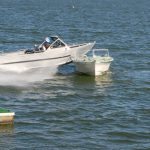
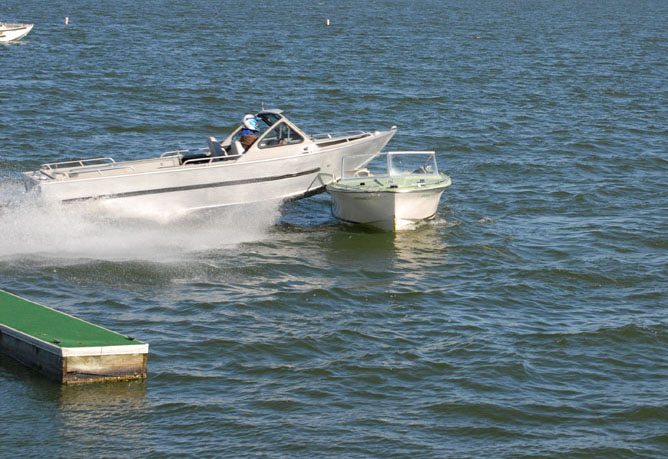
The most reported type of accident in 2003 was a collision with another vessel.
Capsizing and falls overboard account for most boating fatalities (57%).
In 2003, 42% of boats involved in reported accidents were open motorboats.
Personal watercraft were involved in 27% of all reported accidents in 2003. But reported injuries continue a downward trend and have decreased every year since 1996.
Alcohol was involved in 31% of all boating fatalies in 2003, down 8% from 2002.
337 of the 701 boaters who perished in boating accidents during 2000 were on boats 16-ft or less in length.
Nearly 1.3 million boats were sold in 1995 and 1996, with a total value of over 10 billion dollars.
It is estimated that in the United States, there are 50,867,840 acres of lakes; 633,109 miles of rivers; and 88,633 miles of coastal shoreline (including bays and inlets).
More than half of all the people in the U. S. live within 50 miles of a coastline.
In 2003, registered boats in the U. S., commonwealths, and territories totalled 12,794,616, an increase of 55% over a 20 year period. In addition, there are almost 8 million unregistered boats in the U. S. (not requiring registration).
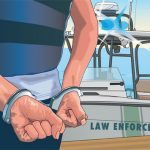
In 1998, there was one boating law enforcement officer in American Samoa for every 12 registered boats. That same year in Illinois, there was one officer for every 6,379 registered boats. On average in the U. S., there were 1,433 registered boats per marine law enforcement officer.
Michigan has the highest number of registered recreational boaters in the U. S., followed by California and Minnesota.
Americans in 1/4 of all U. S. households (41.6 million people) boated between April 1996 and March 1997:
- 37% were college graduates.
- 47% had a household income of $50,000 or more.
- 75% said they’d like to spend more time boating.
- 16 million household owned at least one boat or PWC, for a total of 19.6 million recreational vessels.
- 93% were satisfied with their boating experience.
- 85% said it took them 15 minutes or less to get their boat underway at their access site.
- Only 18% said that congestion at their access site was a major problem.
Runabouts and jon boats comprise about 60% of all recreational watercraft.
54% of boats owned are 16 feet and less.
Only 27% of boats owned are 19 feet and larger.
Personal watercraft account for only 2% of all owned boats.
Personal watercraft account for about 30% of all boating accidents.
Safety instruction for renting personal watercraft is mandatory in 28 states.
84% of PWC operators received no boating instruction.
Most PWC operators who drown were not wearing PFD’s, even though PFD’s are required to be worn by operators of PWC’s in nearly every state.
85% of all recreational boating accidents are attributable to operator error (excessive speed, inattention, failure to follow nav rules and practices, use of, alcohol, lack of knowledge about the boat or boating environment, etc.).
Spending on boating by households of motorboat operators was projected to be $332 billion per year based on the survey.
Only 22% of boaters have taken a boating safety class.
Less than 20% of recreational boat operators involved in fatal boating accidents had taken some type of boating education course.
As of January 1998, 20 states have some form of mandatory boater education requirement.
As of June 2002, 39 states have adopted regulations mandating PFD’s for children.
62% of boats with motors are trailered. (There were 7,683,900 boat trailered owned by U. S. boaters in 2002.)
73% boat on a freshwater lake or reservoir.
22% of boats are kept at a dock and 11% in a slip.
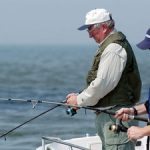
61% of boaters’ primary activity was fishing, day-cruising 50%, swimming 25%, and waterskiing 25%.
The amount of time spent boating was 17.2 days, with the average outing 5.2 hours.
Alcohol usage tops the list of issues of most concern to boaters (28%), and careless or reckless operation (24%).
A recent CG study estimates that boat operators with a blood alcohol level of .10% or higher are 10 times as likely to die in a boating related accident than operators with a zero blood alcohol level.
527,071 boats and engines were the subject of 168 separate recalls during the three year period from 1995-1997.
46% of boaters in a survey support a PFD requirement for children age 12 and under, and 29% for children age 6 and under.
50% of boaters own a type III (near shore) vest and 47% the yoke-style type II’s.
Nearly 15% of boaters report they now carry an inflatible vest, and would wear it should an emergency arise. (“Well, honey, here we, nearly unconscious and mangled from just having been flung overboard by that drunk that rammed us. Now hand me that inflatible PFD, would you?”)
Only 31 states have a policy requiring officers to use a PFD when on the water.
35% of boaters say they wear a life jacket on the water at all times (in a later survey only 6% said they always wear a PFD while underway, and 17% said they NEVER wear one), and 25% say they wear one when doing special activities. 41% say they make their passengers wear a life jacket.
EDITORIAL COMMENT:Commander Bob seriously doubts that 35% of boaters wear life jackets on the water at all times, and further doubts that 41% of boaters make their passengers wear a life jacket, as stated in the previous survey result. But remember, the survey only states they “say” they do.
The National Sporting Goods Association says that Recreational Boating is the tenth most popular activity among those age 7 and over. Walking is first.