In the state of Utah, mandatory youth education cut PWC accidents by 45% in 1996 and another 59% in 1997, according to the National Association of State Boating Law Administrators (NASBLA).
“A PERSONAL WATERCRAFT IS A POWERBOAT, NOT A TOY. IF YOU OPERATE ONE, YOU ARE THE CAPTAIN, WITH ALL THE SAME RESPONSIBILITIES FOR KNOWING AND OBEYING BOATING REGULATIONS AND PRACTICING BOATING SAFETY, AS ANY CAPTAIN OF ANY VESSEL.”
In 1987 there were 5 PWC fatalities. Ten years later, in 1997, there were 83.
In 2007, there were 67 fatalities, compared to 71 five years earlier. Injuries were down, at 982 in 2007, compared to 1,362 in 2002.
As the number of PWC’s rise with the popularity of the sport, personal watercraft owners, and PWC rental businesses, have drawn the attention of the public and their legislators.
Nearly all state laws now have a minimum age requirement for operating a PWC, and over 30 states require that an adult be on board when a minor is operating a PWC. All states now require PWC operators and passengers to wear Personal Flotation Devices, and nearly all prohibit use of PWC’s during some time of the day or night. Some state have set specific speed limits for PWC’s, and the majority of states have prohibited zones for PWC use. Nearly all states now have specific limitations on wake-jumping, and a PWC “kill-switch” is required equipment in over forty states. About half of the states laws now require boating education classes in order to operate a PWC.
For information on PWC laws or certification requirements to operate a Personal Watercraft or other vessel in your state, here is a state-by-state directory of agencies and departments to serve you – http://www.nasbla.org/
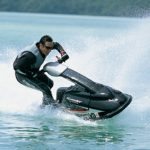
The U. S. Coast Guard classifies personal watercraft, PWC, as Class A inboard boats. That means personal watercraft are subject to the same rules and requirements as any other powerboat, and then some.
In addition to the general regulations in effect for motorboats, PWC owners must also be aware that there are local laws and ordinances around the country that further restrict PWC operations. They include age of the operator, sunrise to sunset limitations, special no wake zone provisions, assigned operating areas and restrictions, and speed limits. Make certain that you know the laws that apply to you in your area of operation.
Federal Regs require that all personal watercraft be registered and display a registration number in accordance with state and federal guidelines.
Properly fitted, CG approved personal flotation devices (life jackets) are required for each person on board, and in most states they are required to be WORN by a PWC operator. There must also be a CG approved, class B-1 fire extinguisher aboard the PWC.
Many PWC have a lanyard connected to the start/stop switch. If your PWC is equipped with such a switch, it will not start unless the lanyard is attached to it. Never start your engine without attaching that lanyard to your wrist or PFD. If you fall off the engine automatically stops running so your craft will not travel a great distance, and you can easily swim to it. It will also prevent the PWC from running amok in areas populated by swimmers or other watercraft.
PWC operators need to keep in mind that a jet drive requires moving water through the drive nozzle for maneuverability. If you approach a dock, shore, or other vessel at a rapid speed and shut off the engine, you will have little or no maneuvering capability.
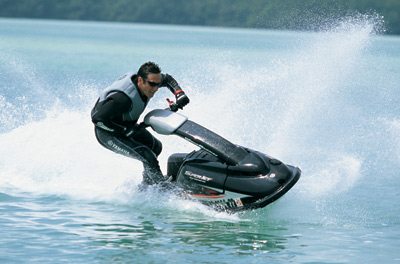
The Personal Watercraft Industry Association (PWIA) also recommends that the operator wear eye protection, a wetsuit, footwear, and gloves.
The vast majority of PWC operators are responsible boaters. They are considerate of the environment, obey the law, and respect the rights of others to enjoy our waterways.
Most complaints to law enforcement officials regarding the operation of PWC’s fall into the following categories. If you are a mature and conscientious operator, try and avoid these breaches of common courtesy and consideration.
- Wake jumping! This is not only irritating to boaters attempting to be watchful and maneuver in heavily travelled areas, but it is extremely dangerous. In just one case, a wake-jumper in Florida got tangled up in the props of a cabin cruiser and was killed.
- No wake zones! If you want to get on the wrong side of a responsible boater, disobey no wake zones. You are likely to find yourself on the debit side of a ticket, since most boaters and shoreline property owners will not hesitate to report violators of slow-no-wake areas.
- High speeds too near shore or other boats! Most states require 100 feet of separation between boats and to the shore at more than no wake speeds. (By the way, no wake means the slowest possible speed your boat will go and still provide maneuverability.)
- Noise! Excessive noise near shore or near anchored boats is sure to draw negative attention. Be considerate of property owners and other boaters.
There are environmental issues that PWC operators need to consider as well:
- Pollution! Refuel on land to reduce chances of spillage into the water. Don’t overfill your fuel tank. Check and clean your engine well away from shorelines.
- Turbidity! In shallow waters where PWC’s can easily operate, the bottom gets stirred up, suspending sediment which cuts down on light penetration and depletes oxygen. This can affect bird and fish feeding. To avoid this, operate your PWC in deeper water. If you do have to traverse shallow water, run at idle speed.
- Vegetation! In coastal areas be aware of low tide. Low water levels expose sea grass beds and other delicate vegetation. Disturbances can cause erosion and long lasting damage. Besides, ingesting seaweed and seagrass is not good for your engine. Feed it clean water and it will run and maneuver much better.
- Wildlife harrassment! A PWC near shore can interrupt feeding and nesting wildlife, and cause animals to deviate from their normal behavior. And that, by the way, is illegal! Mammals such as sea otters, sea lions, manatees, and whales can be injured by direct contact with a boat, and it is believed that the noise from watercraft can even adversely influence breeding cycles and cause birth defects. So avoid areas of high animal populations.